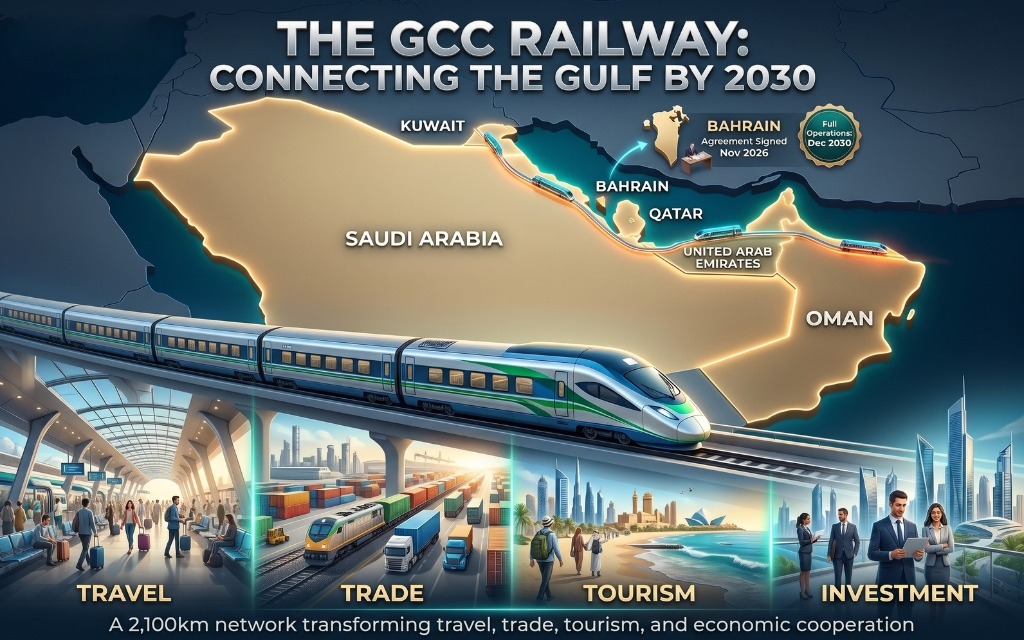
How a regional railway network could transform travel, trade, tourism, and investment opportunities across the Gulf by 2030.
Shine Life Real Estate | GCC Infrastructure & Property Insights | November 2026
Imagine boarding a train in one Gulf country and travelling across a connected railway network that brings six nations closer together.
What once seemed like a long-term regional ambition is now moving towards reality.
The GCC Railway Project, also known as the Gulf Railway, is one of the Middle East’s most ambitious infrastructure developments. Designed to connect Kuwait, Saudi Arabia, Bahrain, Qatar, the United Arab Emirates, and Oman, this regional network aims to transform passenger transportation, freight movement, tourism, and economic cooperation.
A major milestone was achieved on 8 November 2026, when GCC member states signed the General Agreement for the project in Bahrain. With full operations targeted for December 2030, the railway could reshape how people and businesses move across the Gulf.
1. What Is the GCC Railway Project?
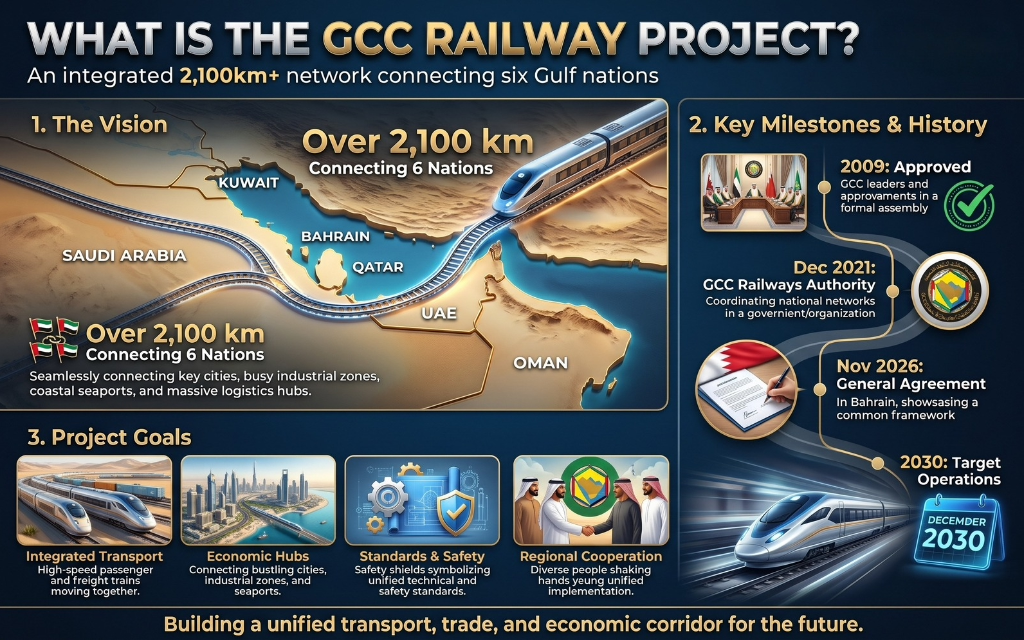
The GCC Railway Project is a planned regional railway network extending over 2,100 kilometers and connecting all six Gulf Cooperation Council countries.
Its primary objective is to establish an integrated transportation system linking major cities, economic centers, industrial zones, seaports, and logistics hubs.
The initiative was approved by the GCC Supreme Council in 2009. In December 2021, the GCC Railways Authority was established to coordinate implementation and ensure compatibility between national railway networks.
The latest General Agreement, signed in November 2026, establishes a common framework for project implementation, technical standards, operational coordination, and railway safety.
2. One Railway, Six Countries: Which Nations Will Be Connected?
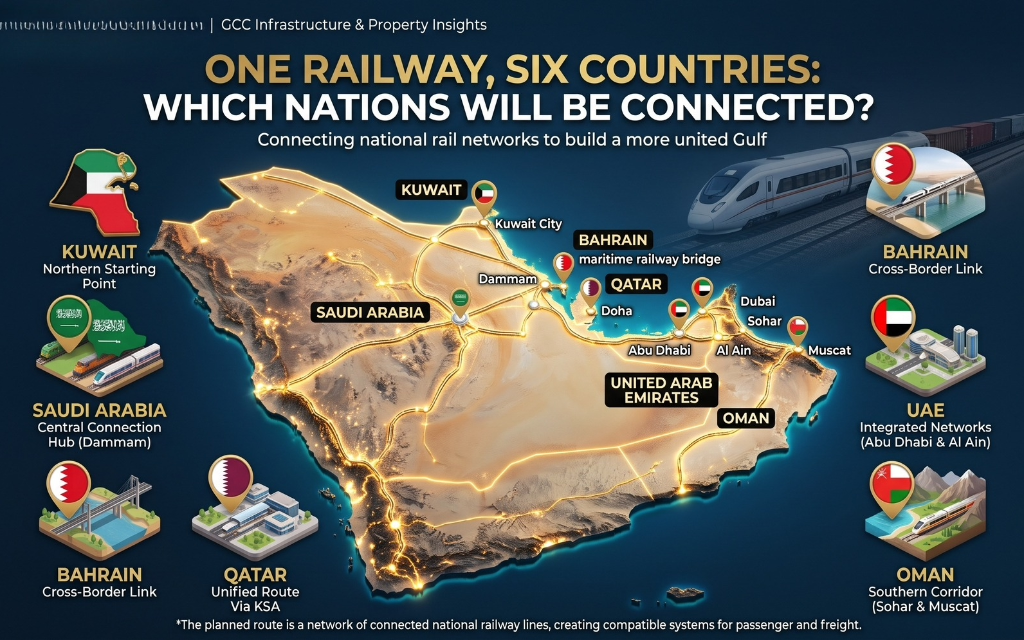
The planned Gulf Railway network will connect six countries:
- Kuwait: The northern starting point of the regional railway corridor.
- Saudi Arabia: A central connection linking several major economic and industrial centers, including Dammam.
- Bahrain: Connected through a planned cross-border railway link.
- Qatar: Integrated into the regional network through the Saudi Arabian route.
- United Arab Emirates: Connecting with the UAE railway network, including Abu Dhabi and Al Ain.
- Oman: Extending through Sohar towards Muscat.
The planned route is a network of connected national railway lines, rather than necessarily one uninterrupted train service travelling through every country.
The vision is to create a more connected Gulf where passengers and freight can move between countries using compatible railway systems.
3. GCC Railway Project Update: The Road to 2030
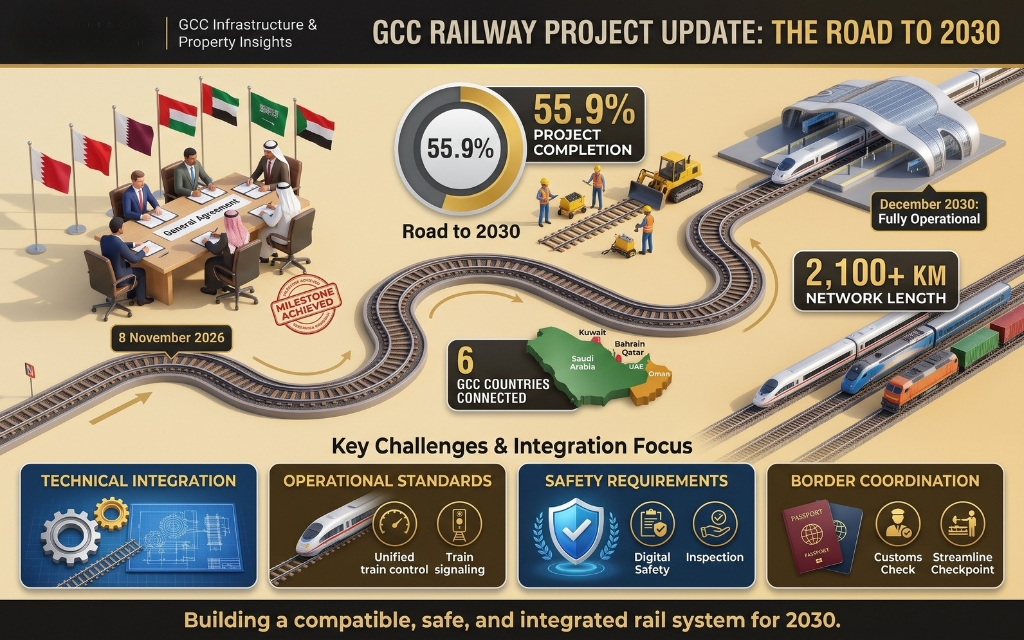
One of the biggest developments occurred on 8 November 2026, when all six GCC countries signed the General Agreement in Bahrain.
According to the latest reported project figures:
- Project completion: Approximately 55.9%.
- Targeted full operation: December 2030.
- Network coverage: Six GCC countries.
- Planned network length: More than 2,100 kilometers.
The agreement establishes responsibilities for member states and provides a framework for technical integration, operational standards, safety requirements, and coordination.
This is an important milestone because building railway tracks is only one part of the project. National networks must also work together through compatible signalling, safety procedures, operational arrangements, and border coordination.
The December 2030 target represents a significant step towards a fully integrated Gulf transportation system.
4. How Could the Gulf Railway Transform Trade and Tourism?
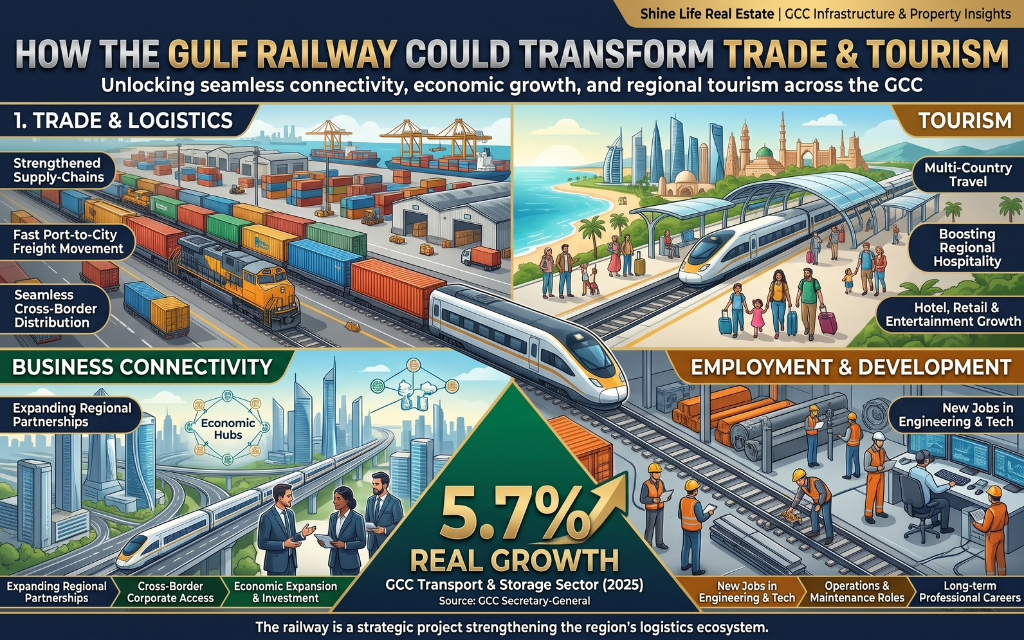
The impact of the GCC Railway could extend far beyond passenger transportation.
Trade and logistics: A connected railway could make it easier to move goods between ports, industrial areas, warehouses, and neighboring and major commercial centers. This may improve regional distribution and strengthen supply-chain efficiency.
Tourism: Easier cross-border transportation could support multi-country travel, encourage regional tourism, and create opportunities for hotels, restaurants, retail, and hospitality businesses.
Business connectivity: Companies could benefit from stronger connections between economic hubs, creating opportunities for trade, partnerships, and regional expansion.
Employment: Railway construction, engineering, operations, technology, and maintenance could generate new professional and business opportunities.
The economic importance of transportation is already visible. According to the GCC Secretary-General, the transport and storage sector across GCC countries recorded 5.7% real growth during 2025.
The railway is among the strategic projects intended to strengthen this growing regional logistics ecosystem.
5. UAE Spotlight: Hafeet Rail Connecting the UAE and Oman
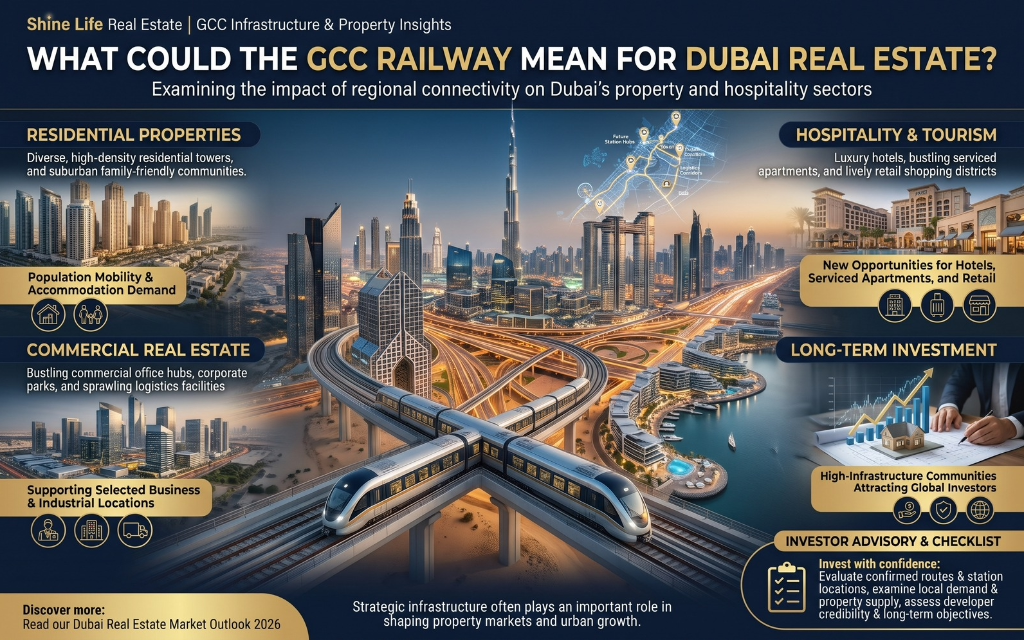
One of the most important railway connections for the UAE is the Hafeet Rail, the 238-kilometer railway project connecting the UAE and Oman.
Developed through a joint venture involving Etihad Rail, Oman Rail, and Mubadala Investment Company, the project is designed to connect the UAE railway network with Sohar in Oman.
In April 2026, Hafeet Rail announced that the project had reached 40% completion.
Construction activity was progressing across strategic locations, including:
- Al Ain, UAE
- Al Buraimi, Oman
- Sohar, Oman
- Wadi Al Jizzi, Oman
The project includes major railway structures, bridges, tunnels, and supporting infrastructure.
It is designed to support freight transportation and future passenger services, strengthening trade connections and providing a foundation for improved travel between the two countries.
This is an important example of how national railway infrastructure can become part of a wider GCC connectivity network.
6. What Could GCC Railway Connectivity Mean for Dubai Real Estate?
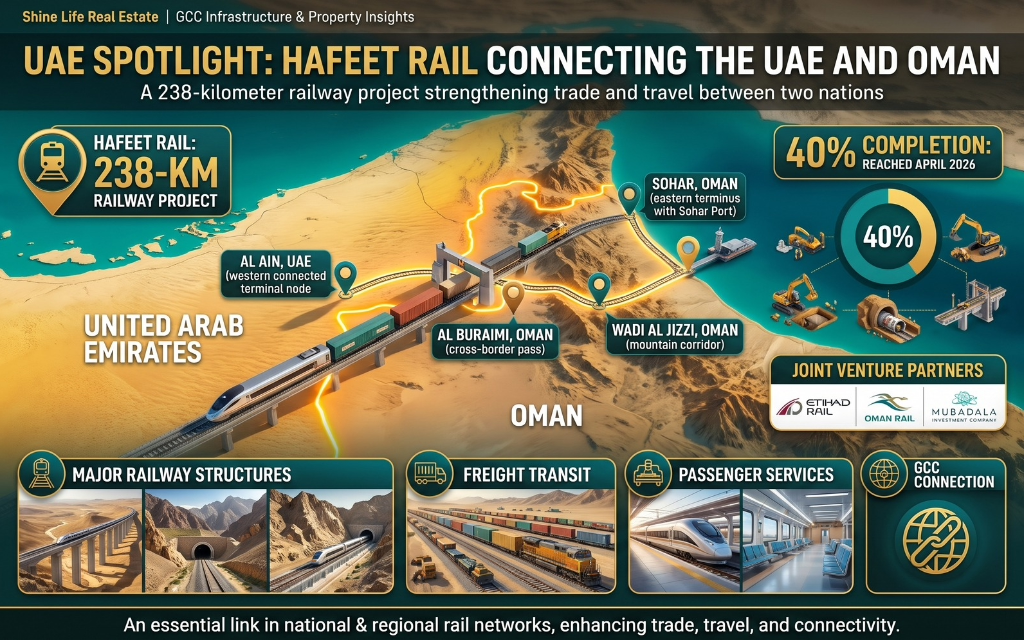
Infrastructure development has always played an important role in shaping cities and property markets.
Improved transportation can influence where businesses establish operations, where employees choose to live, and which locations become more attractive to investors.
The GCC Railway could reinforce Dubai’s position as a regional center for business, tourism, logistics, and international investment.
Potential areas of influence include:
Residential properties: Improved regional accessibility could support population mobility and accommodation demand as business activity develops.
Commercial real estate: Stronger connections between commercial centers and logistics facilities could benefit selected business and industrial locations.
Hospitality and tourism: Increased regional travel could create additional opportunities for hotels, serviced apartments, and retail businesses.
Long-term investment: Communities supported by confirmed infrastructure, employment opportunities, and established amenities may attract investor interest.
However, infrastructure announcements do not guarantee property-price appreciation. Investors should examine confirmed railway routes, station locations, local demand, property supply, developer credibility, and long-term investment objectives before purchasing.
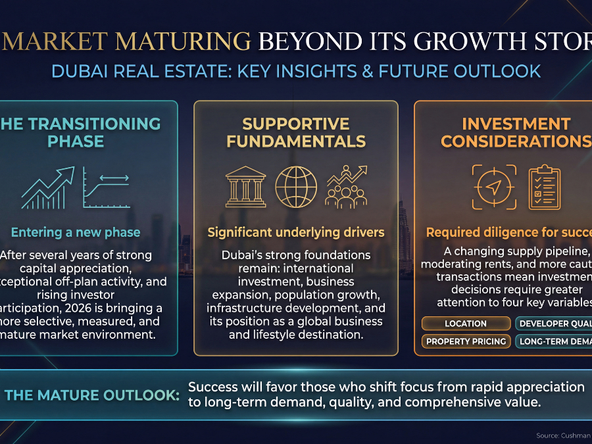
For additional insights into Dubai’s property market, read our Dubai Real Estate Market Outlook 2026.
7. Opportunities and Challenges Ahead
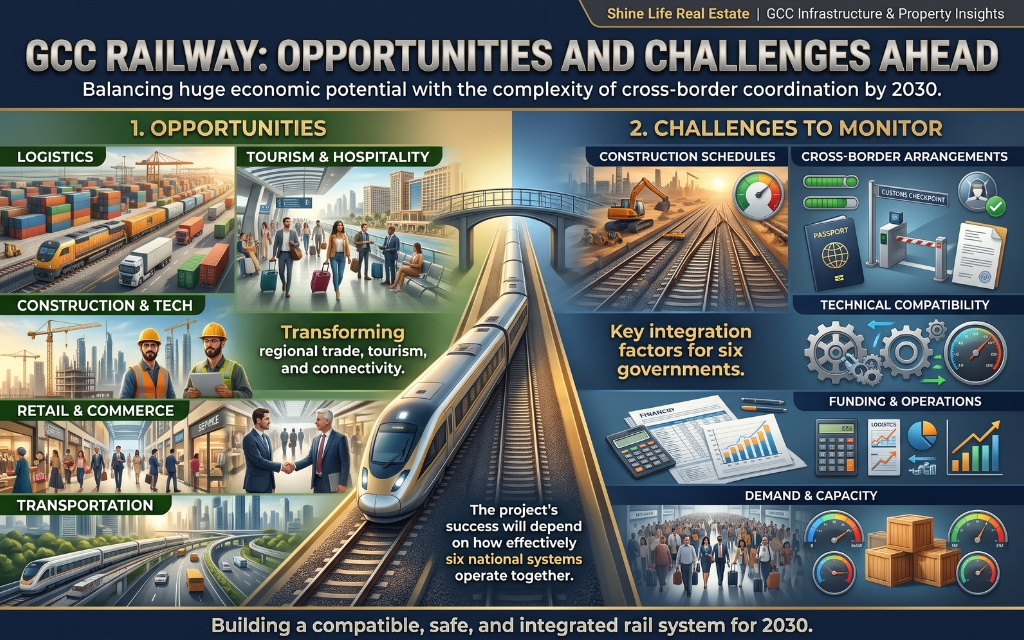
The GCC Railway could create opportunities across several industries, including logistics, tourism, hospitality, construction, retail, and transportation.
However, delivering a cross-border railway network requires careful coordination between six governments.
Some of the important factors to monitor include
- Construction schedules and national infrastructure readiness.
- Cross-border operating arrangements and customs procedures.
- Technical compatibility and railway safety standards.
- Funding, maintenance, and operational planning.
- Passenger demand and freight capacity.
The success of the project will ultimately depend on how effectively the six national railway systems operate together.
8. The Shine Life Real Estate Perspective

The GCC Railway represents more than a transportation development. It is a long-term investment in regional connectivity, economic cooperation, and sustainable infrastructure.
As the Gulf becomes increasingly connected, the relationship between transportation, employment, business activity, and property demand will become more important.
For Dubai property buyers and investors, understanding these developments can help provide a broader perspective when evaluating future opportunities.
At Shine Life Real Estate, we believe that informed decisions begin with understanding the market, evaluating locations, and focusing on long-term value rather than short-term speculation.
9. Frequently Asked Questions About the GCC Railway Project
1. What is the GCC Railway Project?
The GCC Railway Project is a planned regional rail network designed to connect six Gulf countries and facilitate passenger and freight transportation.
2. Which six countries will the GCC Railway connect?
The railway will connect Kuwait, Saudi Arabia, Bahrain, Qatar, the United Arab Emirates, and Oman.
3. When will the GCC Railway Project be completed?
The current target for full operations is December 2030.
4. What percentage of the GCC Railway Project is complete?
The project was reported to be approximately 55.9% complete as of 8 November 2026. Individual national railway sections may have different progress levels.
5. How will the GCC Railway benefit the UAE?
It could strengthen cross-border passenger transportation, freight movement, logistics, trade, and tourism while improving connectivity between the UAE and neighboring GCC countries.
6. Will the GCC Railway increase Dubai property prices?
Improved connectivity could support economic activity and property demand in selected locations over time. However, property-price growth is not guaranteed and depends on multiple market factors.
THE FUTURE OF THE GULF IS CONNECTED. IS YOUR NEXT INVESTMENT READY?
As the GCC moves towards a more connected future, understanding infrastructure developments can help buyers and investors make better-informed property decisions.
Whether you are looking for a residential property, exploring off-plan developments or considering an investment opportunity in Dubai, Shine Life Real Estate is here to guide you.
Let’s find the right property for your investment goals.
📍 SIT Tower, Suite 912, Dubai Silicon Oasis, Dubai, UAE
📞 04-228-2868
✉️ info@shinelife.ae
🌐 https://shinelife.ae/
SHINE LIFE REAL ESTATE — YOUR PARTNER IN DUBAI PROPERTY.
Disclaimer: This article is intended for general informational purposes only and does not constitute financial, legal or investment advice. Infrastructure routes, project schedules and completion estimates may change. Property values and rental returns are not guaranteed. Readers should conduct independent research and due diligence before making investment decisions.